Oklahoma Invention and Inventors
Some of the smartest and most creative minds have come from Oklahoma. Along with the many great places to visit and the numerous famous people that come from the state, Oklahoma boasts countless inventions that have changed our lives for the better.
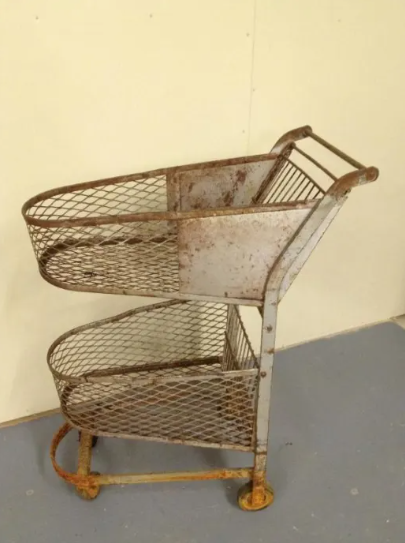
The Shopping Cart: Oklahoma City, Oklahoma
Sylvan Goldman is credited with creating the first shopping cart in the United States. He owned the Humpty Dumpty Supermarket chain in Oklahoma City. Noticing that his customers were limited by the amount of merchandise they could pack into hand-held baskets, he came up with an idea for creating a portable shopping cart.
His idea was simple; he put a large basket on top of a frame that looked like a folding chair on wheels. This new “shopping cart” could easily be wheeled freely down the aisles of the supermarket.
Sylvan’s new invention was introduced in his Oklahoma City stores on June 4, 1937. Since the invention was such a success, he then applied for a patent on March 14, 1938. The application was granted on April 9, 1940 (Patent No. 2,196,914).
Sylvan became a multimillionaire from the royalties paid for each shopping cart manufactured during the 17 years that the patent was valid. In his later years, Sylvan became a philanthropist. He donated funds to build the Sylvan N. Goldman Center of the Oklahoma Blood Institute.
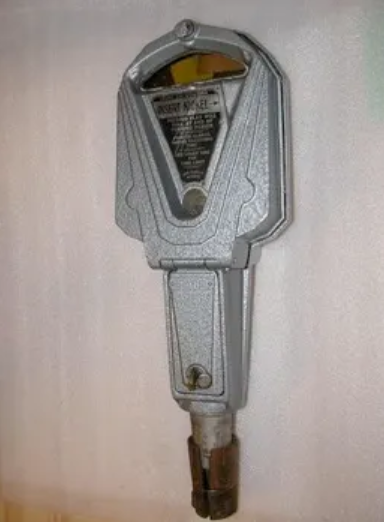
The Parking Meter: Oklahoma City, Oklahoma
The first parking meter wasn’t designed to make money, but rather, it was designed to keep drivers from hogging the best parking spots in front of stores.
Carl C. Magee of Oklahoma City invented and patented the “coin controlled parking meter” on May 13, 1935. His application was approved and a patent was issued on May 24, 1938 (Patent No. 2,118,318).
The first meter was installed in Oklahoma City on July 16, 1935 with the stated purpose “to control on-street parking,” but it was obvious from the beginning that another purpose was to generate revenue for the city. The device charged five cents an hour. Currently, parking meters in the U.S. generate about $1.25M per day in revenue!
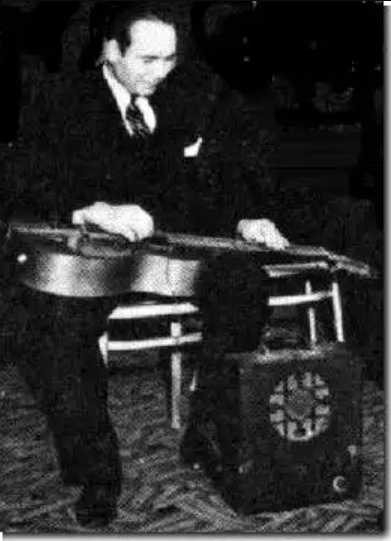
Electric Guitar: Beggs, Oklahoma
Bob Dunn, a musician from Beggs, Oklahoma, is the first musician to record an electrically amplified instrument. Dunn was primarily a jazz trombonist, but soon became a pioneer Western Swing steel guitarist. It is certain that he wasn’t the first to try merging electricity with guitars, but he is often credited as the first to successfully electrify his guitar.
There is an old story that relates that Dunn hooked his guitar up to a car battery during an outdoor dance in order to be heard. Historian Kevin Reed Coffey indicates that Dunn wanted to accomplish more than volume with electrification. He writes, “Not content with just being louder, Dunn experimented with ways to capture the brassy resonance of jazz horns. According to surviving contemporaries, he emulated musicians such as Texas trombonist Jack Teagarden and the great trumpeter Louis Armstrong, and his approach to the steel was based on their styles, their tone, their phrasing and attack.”
Bill C. Malone states that “Dunn converted a standard round-hole Martin guitar into an electric instrument by magnetizing the strings and raising them high off the box. He then attached an electric pickup to the guitar, which in turn was connected to a Vol-U-Tone amplifier.”
Dunn’s first use of electric guitar on a recording was in January, 1935, with Milton Brown and his Musical Brownies. Dunn was elected to the Steel Guitar Hall of Fame in 1992.
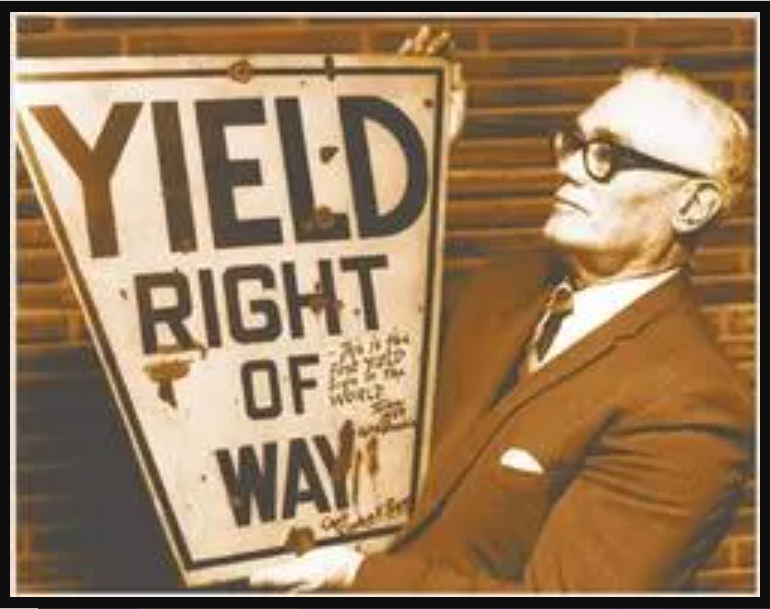
Yield Sign: Tulsa, Oklahoma
Clinton Riggs, from Tulsa, invented the triangular “yield” sign that is so popular across the country today. He served in the Tulsa Police Department for three years (1934-1937) before joining the Oklahoma Highway Patrol as one of the original troopers.
After Air Corps service during World War II, Riggs rejoined the Tulsa Police Department in 1945 and rose to the rank of administrative assistant chief, retiring in 1970. After retirement, Riggs taught at the University of Tulsa and Tulsa Junior College.
The first two yield signs were installed at First Street and Columbia Ave in 1950. The original signs were keystone shaped and were painted yellow with black lettering. One of these early manufactured signs is on display at the Smithsonian Institution.
Riggs apparently conceived the idea of the sign while working for the Oklahoma Highway Patrol. He became infatuated with the idea while attending Chicago’s Northwestern Traffic Institute in 1939. For over a decade, he experimented with the concept off and on, striving to create a sign that would not only control traffic at an intersection but that also would affix civil liability in a collision in which one driver failed to yield.
Since the first sign was put up in 1950, the yield sign has helped motorists for over 50 years.
Transistorized Sportfishing Sonar, Tulsa, Oklahoma
In days long past, finding where the fish were biting took a specialized knowledge. Things became easier when, in the late 1950s, Carl Lowrance and his sons, Darrell and Arlen, developed and sold the first transistorized sportfishing sonar. “The little green box,” as the Fish Lo-K-Tor was known, quickly became the most popular sonar instrument in the world.
Today, Lowrance Electronics Co. in Tulsa specializes in marine electronics and Global Positioning System devices.
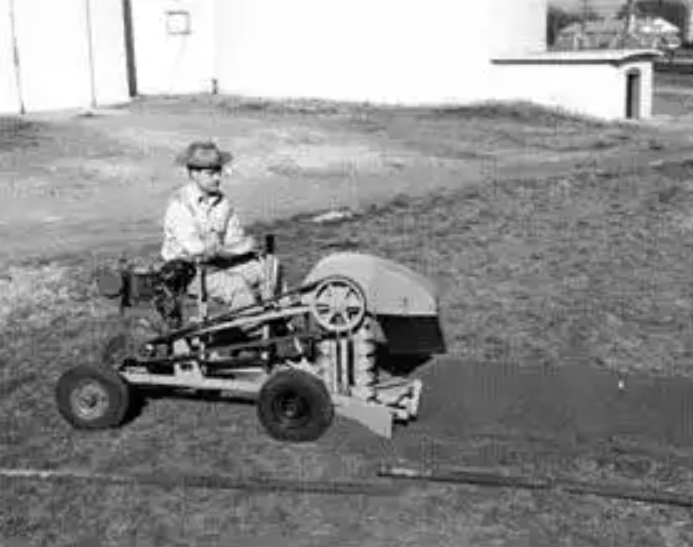
Compact Trencher/Ditch Witch, Perry, Oklahoma
Ed Malzahn had an idea that would revolutionize the way farmers and gardeners worked. In days long past, they would mainly use hand tools in order to prepare the ground for crops. This was a long and hard process, and for Ed Malzahn, he saw an opportunity that he couldn’t resist.
In 1902, Ed’s grandfather, Carl Malzahn, moved to Perry, Oklahoma and opened a blacksmith shop with his sons Charlie and Gus. During the oil boom, the highly profitable shop came to be known as Charlie’s Machine Shop. Charlie’s son Ed graduated from college with a degree in engineering. Shortly after graduating, Ed had an idea for a mechanical trencher that would end laborious process of preparing the ground with hand tools. He perfected the idea in 1949, and called the device the “Ditch Witch.” Charlie’s Machine Shop became Charlie’s Machine Works, Inc., and quickly put into production the “Ditch Witch”.
Charlie’s Machine Works, Inc. is stronger than ever today, employing over 1300 in Perry. The Ditch Witch line has expanded to include horizontal drilling equipment along with many other devices.
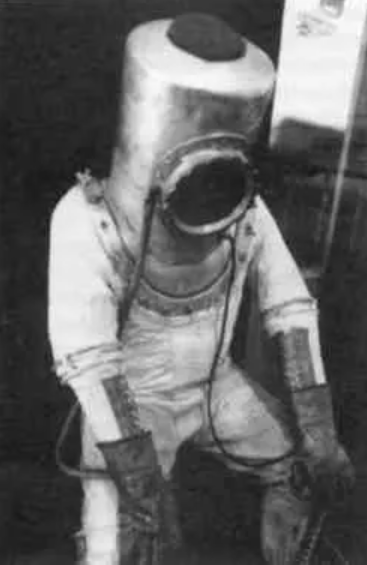
Pressurized Flight Suit, Maysville, Oklahoma
It was in 1934 that Wiley Post took on the challenge of high altitude flight. Knowing that altitude sickness would be a problem, he devised the pressurized flight suit that made flight at high altitudes possible. Wiley developed the suit with the assistance of R. S. Colley of the B. F. Goodrich Company. The suit consisted of three primary layers. The first layer was long underwear next to the skin for warmth. The second layer consisted of an inner rubber pressure bladder, and the third layer was an outer suit made of rubberized parachute cloth. The outer suit was secured tightly to a frame with arm and leg ports. Pigskin gloves, rubber boots, and an aluminum helmet completed the pressure suit. It may not have been that comfortable to wear, but it certainly paved the way for high altitude flights for years to come.
Other Noteworthy Oklahoma Inventions
Arthur A. Jones, inventor of the Nautilus exercise machine, was raised in Seminole, Oklahoma. The exercise equipment was the first to use variable resistance to build muscles.
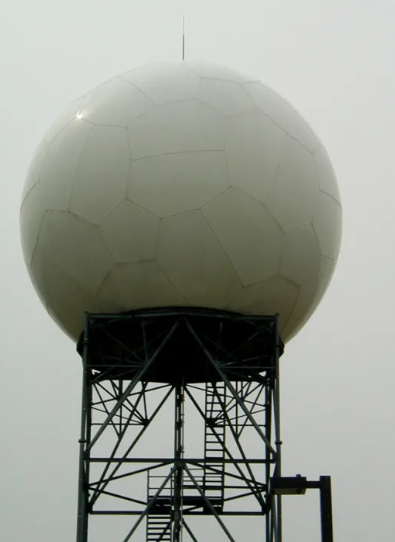
NEXRAD (Next generation weather radar) was invented by a pair of professors on the faculty of the University of Oklahoma’s School of Meteorology. The Operational Support Facility for the NEXRAD program is located at the National Weather Service Forecast Office in Norman, on the campus of the University of Oklahoma.
The automated Twist Tie machine was invented in 1961 by Earl Burford and first used at the Rainbow Bakery in Oklahoma City, now known as the Sara Lee Bakery.
Field’s Pecan Pies originated in 1925 in Pauls Valley when brothers Lee and Julian Field persuaded their wives to bake pastries for their restaurant customers. Today, the famous pecan pies and other goodies are distributed throughout the state and beyond.

© 2010 | Eric Standridge