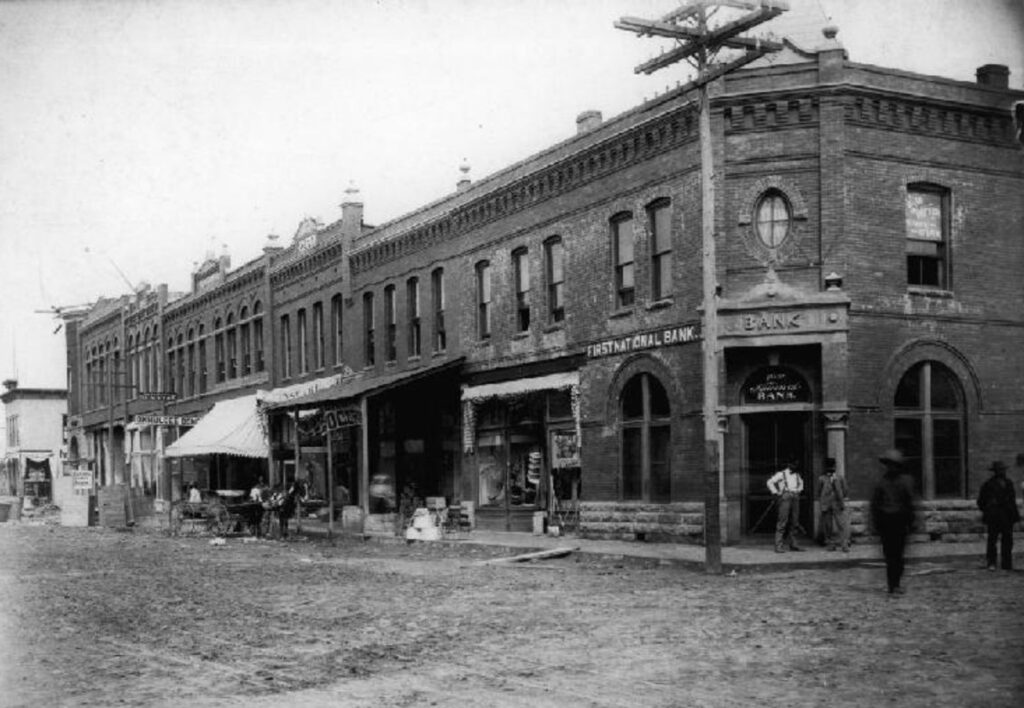
Okmulgee: The Creek Indian Capital
Okmulgee’s history is rich with both triumph and tragedy. From the rebirth of the Creek Indian and the many state-changing decisions made in Creek Counsel House to the tragedies of the Great Depression, this series will outline the key events that brought this small town national prestige.
In this article about historic Okmulgee, significant historical perspectives are outlined, as well as some interesting tales of Okmulgee, a historical timeline, and shop prices in and around Okmulgee.
Before you leave, be sure to check out the other pages in the Okmulgee History series.
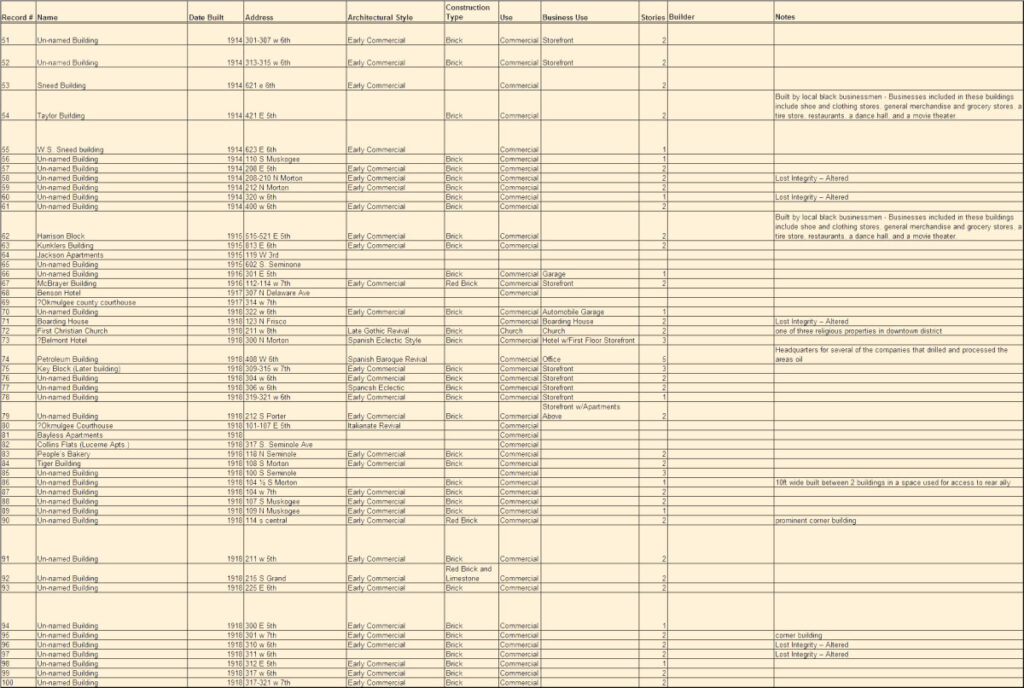
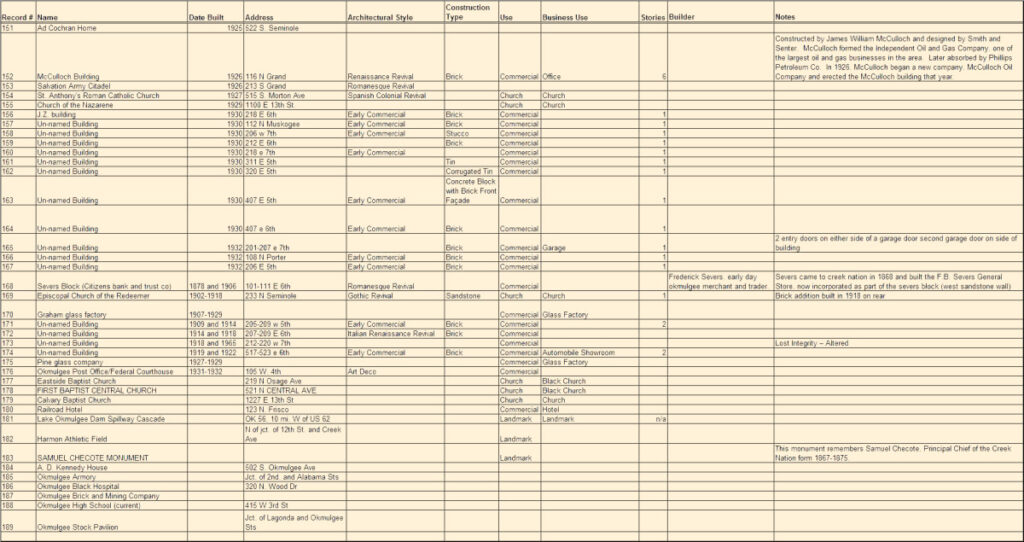
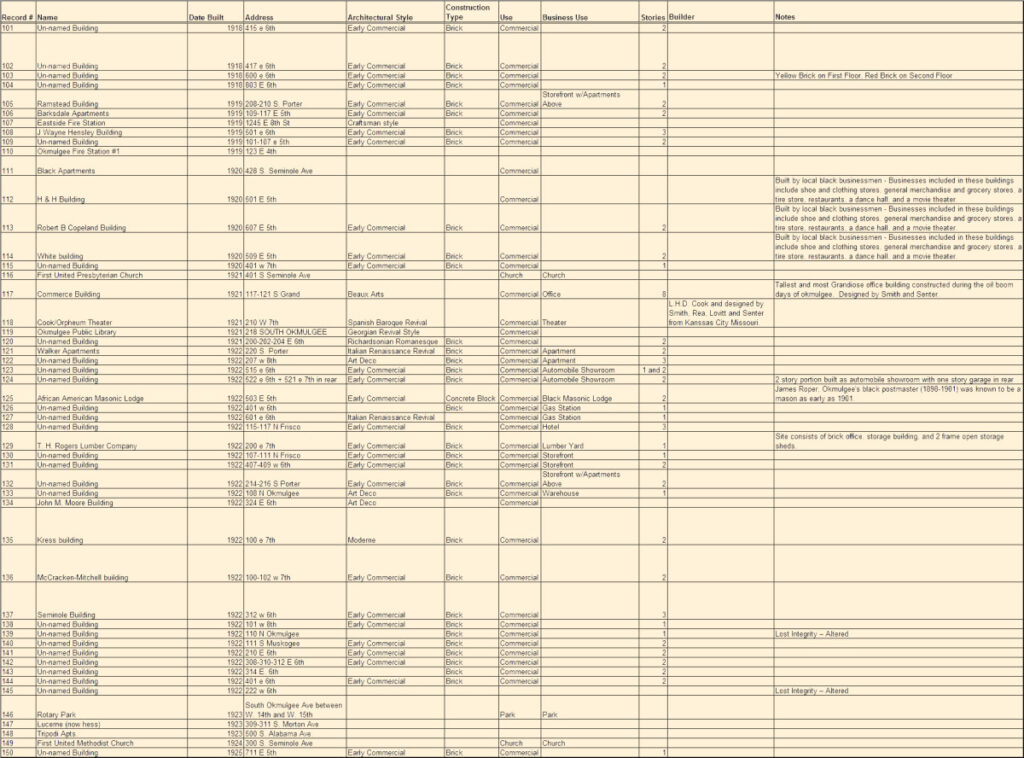
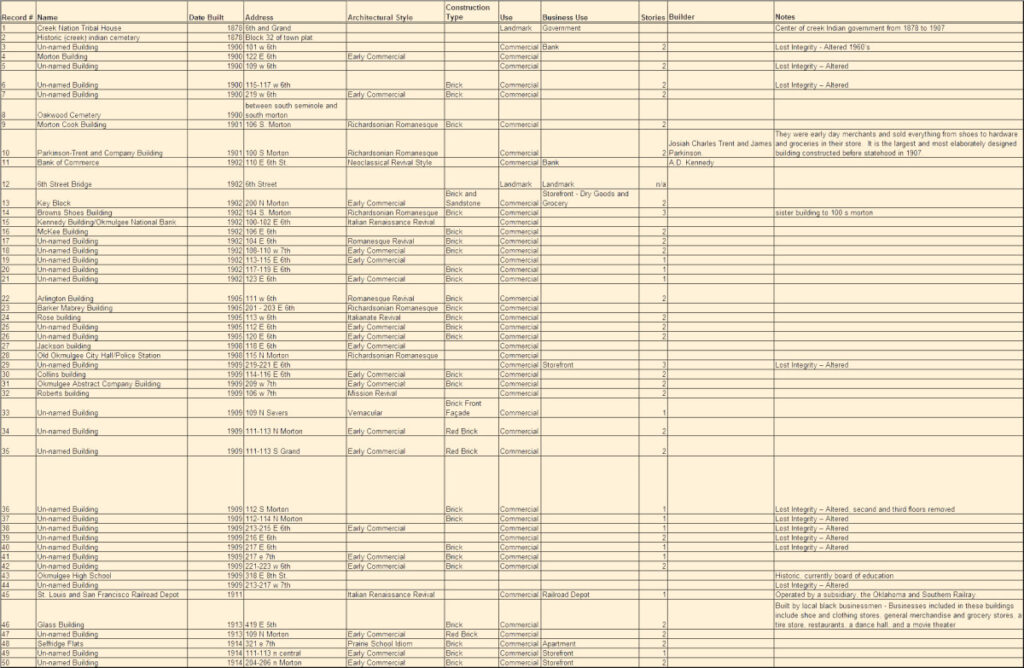
Note: Upon request, the Okmulgee Historic Buildings datasheets have been added under the “comments” section at the bottom of this article.
Okmulgee History 1900-1909: The Birth of a City
Following the completion of the St. Louis, Oklahoma and Southern Railway in 1900, Okmulgee entered into a new era of expansion. A growing number of new residents encouraged the platting of housing additions, and new water, natural gas, telephone, and electrical systems were installed. At 1907 statehood, Okmulgee had over 2000 residents and was quickly becoming a bustling city full of life.
Okmulgee Overview 1906-1907
Okmulgee now had 75 stores, 27 attorneys, three cotton gins, five livery barns, two wagon yards, and two soda pop factories. The Hotel Glenn – only one block from the Frisco depot, advertised rooms for $1.25 a day.
There were no paved streets in Okmulgee at this time, only wooden sidewalks and plenty of hitching rings for horses everywhere.
Daily Life in Okmulgee 1900-1909
Daily life in Okmulgee generally followed the trends set forth in the rest of the country, although at the time Okmulgee was sparsely developed. The entire Okmulgee county population numbered only 4,000, including 179 blacks.
The earliest non-Indian settlement was known as the “White Settlement” and was located about one mile east of the railroad station on what is now East Fourth Street. The twenty acre area included two or three houses, a hotel, a general merchandise store, grocery store, and a school for whites. Around 1900-1905, the businesses moved to the east side of the Frisco Railroad tracks where the first, and at that time the only hotel was located. The hotel was named The Capital and was conducted by Silas Smith, a prominent member of the community. North of the hotel was located the wetmore grocery store and a large rock building, at what is now second and Comanche, which served as a hay barn to store baled hay for shipping via the railroad.
On the corner of fifth and Morton was a lot which had been used by the creeks to slaughter cattle and corral horses. A large gate marked the end of morton street, beyond which was open pasture. Entrepreneurs built the Key Block on the street.
On Main Street, from the post office west, the rest of the block was lined with tents which housed establishments of less savory ilk – gambling houses, brothels, flea-bag boarding houses, and bootleg whiskey Joints. Prohibition was a farce in those days. Barrels of liquor were hauled into the Nation by wagonload. They were dispensed at 50 cents a pint, 25 cents a half pint.
In the early days of the drug business, retail druggists manufactured their own products from primary ingredients. Quinine and calomel were common remedies.
There was only a single telephone line in Okmulgee. It stretched from Muskogee to one of Okmulgee’s drug stores.
While many businesses sprang up around the Creek Council House, Agriculture still prominent business in area.
People still traveled mainly in Covered wagons and on horseback. If people wanted to marry, they had to show up in Muskogee and file an application for the license. It sometimes took weeks, even months, for the license to make the return trip. Between 1902 and 1910, a one passenger hack owned by A.B. McGill hauled mail between Okmulgee and Muskogee
From around 1908 until the next decade, many people moved to Okmulgee to scout for oil. With the coming of the railroad and discovery of oil around Okmulgee, this sleepy little town was soon to become home to more millionaires than anywhere else in the country.
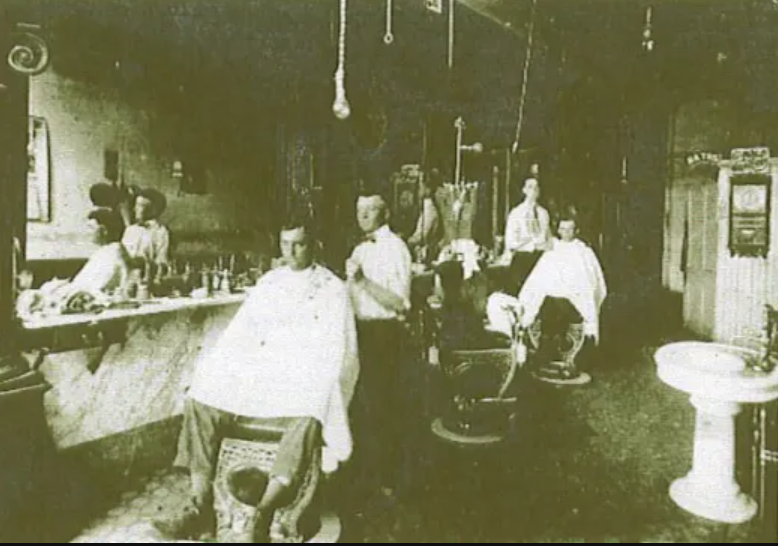
Barber Prices
- Hair Cut 35 Cents
- Singeing 35 cents
- Shampooing 35 cents
- Massaging 35 cents
- Mustache Dyed 50 cents
- Head Shaved (top) 15 cents
- Hair Tonic 15 cents
- Razor Honing 50 cents
- Shaving 15 cents
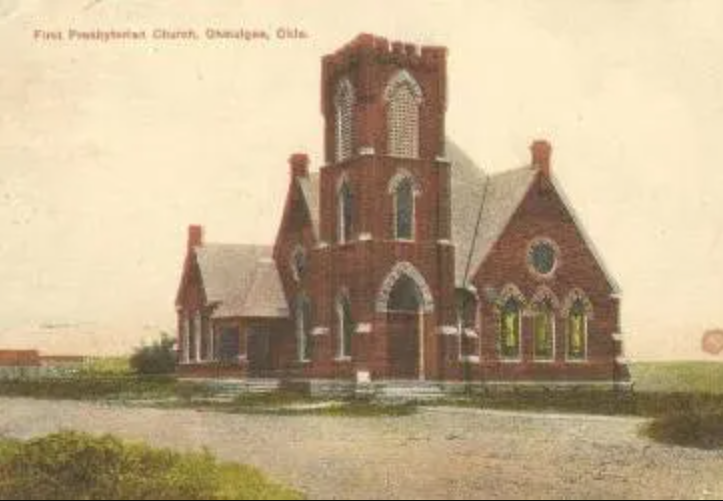
Okmulgee Timeline 1900-1909
1900
- First city election was held in the spring – Candidates were democrat William C. Mitchener and Republican George Washington Evans. Evans was elected first mayor.
- The railroad, the Frisco, arrived in Okmulgee, bringing with it a flurry of immigrants to the city. The first train arrived from Tulsa on July 5th, 1900. Regular train service was inaugurated July 16th. Hundreds gathered to see the first train come in. For many, it was the first time they had seen anything that moved except by horse or oxen. When the engineer called for everyone to clear the way to leave, he blew his whistle, and dozens of startled people jumped into Okmulgee Creek to get out of the train’s way. The first freight train from Okmulgee carried cattle belonging to Severs, Parkinson, and H.B. Spaulding.
- Okmulgee Democrat founded
- In 1899, H.C. Beckman bought a 100 ft. square lot for $1,000. It included a store and a five-room house. The store opened in 1900 and carried everything from plows to sewing machines to utilities. The building stood south of the council house, on what is now Seventh Street. Store front sign advertised items for sale: hardware, stoves, tinwork, implements, vehicles, and undertaking.
- First zinc bathtub brought into Okmulgee.
- Chamber of commerce organized.
1901
- Dr. G.W. Bell builds the Bell Block at 6th and Morton. The first floor served as the drug store. They shipped in ice cream from Muskogee by express. Water for the fountain came in 10 gallon tanks which they got from a well in the center of what is now seventh and Morton. The tanks were placed in cradles, carbonic gas was introduced into the containers and they were rocked for 15 to 20 minutes to carbonate the water. On the top floor was the popular Bell’s Opera House. When not in use for professional entertainment, it was used for Chamber of Commerce meetings, high-school graduations, dances and other special occasions.
- First white public school was established by E. E. Riley for a 6 month term.
1902
- The first hospital was opened in Okmulgee in a brick house on Muskogee Ave. north of greasy creek but moved several times before settling on a location on 8th street.
1903
- A severe sleet storm tore down most of the telephone lines in Okmulgee. The entire force – two linemen and a horse and wagon- were sent to restore service.
- Okmulgee Light and Power Company was established. There were 15 street lights and 16 light meters. The street lights were arc lamps, which had to be trimmed each day or two and new carbons placed inside to form the arc poles.
1904
- The Informer, a newspaper for black readers, published for a short time
- Okmulgee National Bank opened in its own building. It featured banking on the first floor and barbering in basement.
- September 14th – after several attempts, the first water works was implemented, complete with a reservoir, four wells, a water tower, fire hydrants downtown, and water meters (35 cents for the first 1000 gallons).
1906
- Creek tribal government Dissolved
- On June 6th, two five seated automobiles appeared in Okmulgee, the first of their kind in the town.
1907
- 6th Street becomes the first street to be bricked at a price of 75 cents a yard.
- Severs Block remolded and expanded to the east, turning the top floor into office space and refacing the entire building with brick and marble.
- On May 10th, The first productive oil well to strike oil in the county had come in two miles south and one mile east of Morris.
- First live motion picture theater opens. The Elks Electric Theater opened on May 11th, located downstairs from the Opera House and shared space with the Elk drug store. The movie featured was “The Hidden Hand”.
1908
- Okmulgee City Hall constructed on 5th and Morton.
- Okmulgee opens its first refinery, the Okmulgee Refining Company, at 700 N Severs. The following year, the Creek Refining Company was organized. Within one year, there were 19 gushers in the area.
1909
- Okmulgee opera house opens with it’s first showing of “The Merry Milkmaids”
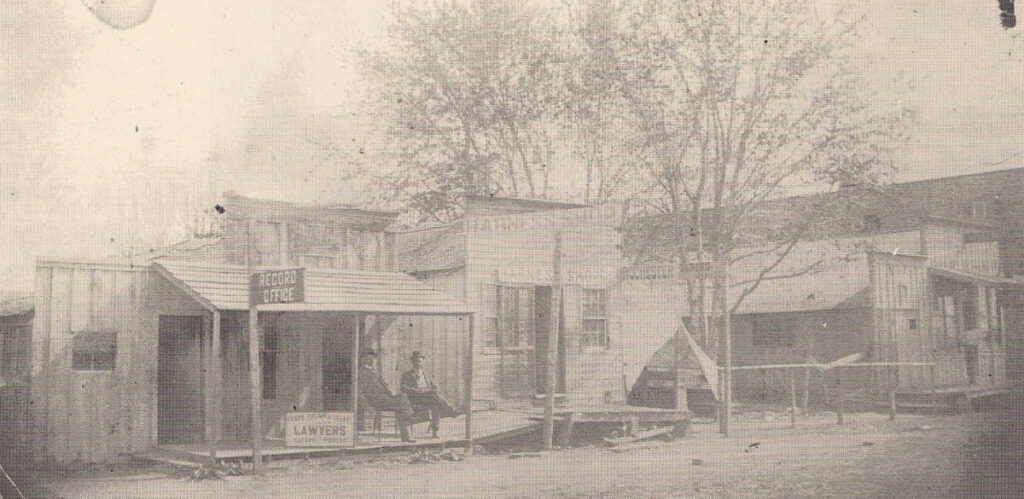
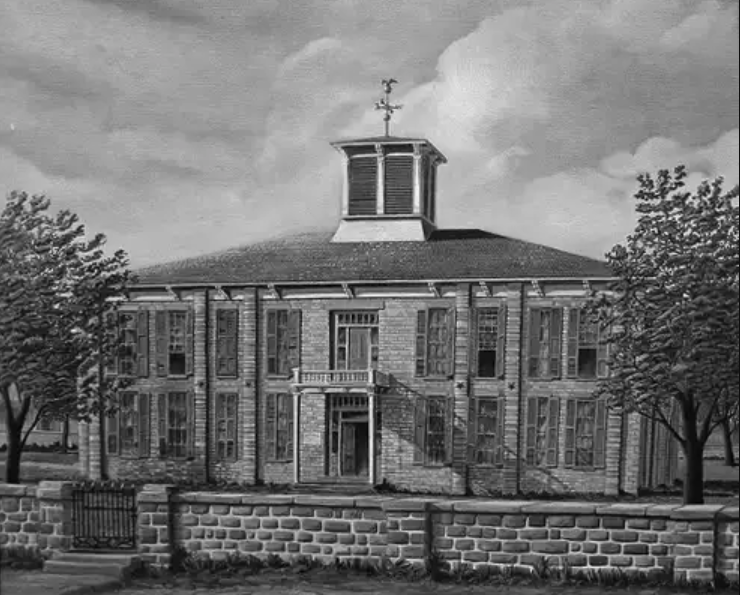
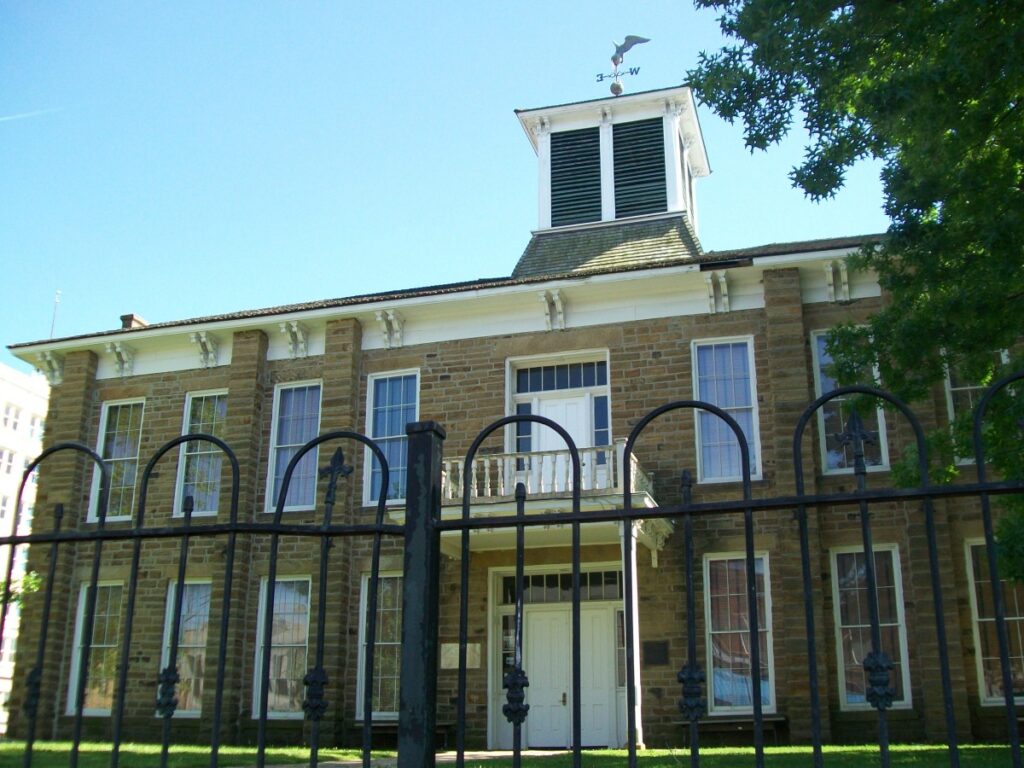
Stories of Okmulgee 1900-1909 (Including Pre-1900)
Shorts
In 1899, Okmulgee’s principal street consisted of a handful of businesses, a dirt road and enough grass and weeds to allow four-footed transportation to graze while the men passed the time of day.
One of Okmulgee’s earliest newspapers, The Democrat, was located in a small frame building on 6th street, a few yards west of Central Avenue. When the second survey of Okmulgee was completed, it was found that the building had been built in the middle of 6th street, so it had to be moved.
The first long distance telephone line into Okmulgee was established in 1900 when the Muskogee National Telephone Company constructed a like from Muskogee, and set up a long distance station in Fred Martin’s Drug Store.
One story John Russell told concerned Bunch’s wife Mamie. As was the custom of those days, the women served the men their meal first, then the women ate after the men had finished. According to John, when Bunch and Mamie were married, Mamie, a city-raised, college educated woman, pulled her chair to the table and said “pass the bread”.
Building a City
Two incidents of early-day Okmulgee
In the year 1900, the Frisco Railroad built through the settlement of Okmulgee, which at that time was 400 residents strong. The laying of the rails, and the beginning of regular freight and passenger service gave the capital of the Creek Nation its most important shot in the arm. Okmulgee’s potential was seen not only by its citizens but by outsiders. One of these early non-residents was named Charles Douglas, the president of a Kansas City town-site firm.
Upon his recommendation, the company purchased a large tract of land to the east of the Frisco tracks. It was their belief that the “Old Okmulgee”, the area around the Council House and Captain Severs’ store, would be eclipsed by the new Okmulgee they were hoping to build.
Sometime in 1900 or 1901 the first town site map of Okmulgee was drawn up. If one examines that map today, he or she will find what seems to be an anomaly in the naming of the east and west streets.
For example, what was (and is) called First Street on the west side of the Frisco tracks is named Kellar Street to the east of the tracks. Second Street is known as Durkee Street on the east side of the Frisco. What was Fourth Street on the west side is called Main Street on the east. For all practical purposes, the streets are exactly the same as to location—only the names are different in the case of every street from First to Eighth.
This seeming contradiction in the street names was a direct result of the townsite company’s plans for a second Okmulgee. For the most part in 1900 and 1901, there were two Okmulgees!
Another factor which contributed to the division of “Old” and “New” Okmulgee was Okmulgee Creek. Pedestrians could cross on the footbridge, but buggies and wagons had to negotiate the steep banks and deep waters of the creek. During periods of heavy rains, the creek flooded, effectively dividing Okmulgee into two halves, just as the townsite company wanted.
It is to Charles Douglas’s credit that in time, he realized that Okmulgee could not live as two towns. In 1902 he built the first wagon bridge over the creek at Eighth Street. One year later he built a second bridge at Sixth street. This bridge is the same one that spans Okmulgee Creek today.
New Okmulgee merged with Old Okmulgee. The name Kellar, Durkee fell into disuse. Charles Douglas remained in Okmulgee and became one of the town’s prominent citizens. A wealthy man by the 1920s, he would build Douglas Park, one of the best amusement parks in the Southwest. He died in 1934.
- The American City – Google Books
The article mentioned previously in the comments section on the Okmulgee Hotel can be found by following this link. The article appears on page 79. It is titled, “Okmulgee’s New Hotel”, and includes a photo of the Okmulgee Hotel.
Okmulgee Historic Building Data Sheets
These datasheets list information on almost 200 of Okmulgee’s historic downtown buildings. The files are too large to be viewed online, so in order to view the entire sheet one must download the image files.

© 2010 | Eric Standridge