Life took him back to Tulsa, but the journey that Bob Wills took to get there was unique. During the 1930’s, radio was huge. It was also hugely expensive.
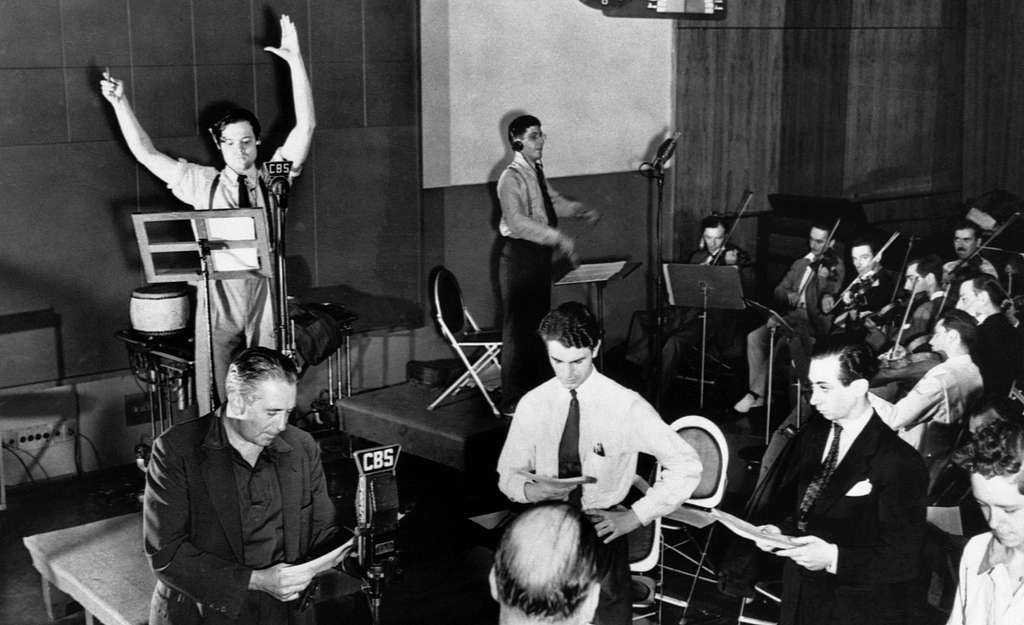
Early on, Bob Wills and his band started to get a big following in Texas. Looking to expand into radio, and reach a bigger audience, they signed a contract with W. Lee “Pass-The-Biscuits-Pappy” O’Daniel. O’Daniel was the president of the Burrus Mill, and also saw a future in radio. His vision was not for music, rather he found it to be a productive way to advertise his business. Bob Wills signed on with O’Daniel, and the band immediately became The Light Crust Doughboys, and began playing on the radio.
In those days, much of radio was still live. The band would set up in the WACCO Radio broadcast station, and play a few songs. Between sets, they would advertise flour for the Burrus Mill.
The success grew as they became well known throughout Texas and the surrounding areas. Clad in classy sweaters and ties, Bob Wills and the Light Crusted Doughboys present wholesome, traditional image. By contract, this was necessary to promote O’Daniel’s business. More than that, O’Daniel was a politician who was running for (and would be later elected to) Governer, and later U.S. Senator. When Bob Wills told him that they wanted to start playing for dance halls, and other clubs, O’Daniel refused; considering such places too seedy for his boys.
Enter: The Playboys
Bob Wills took a gamble and decided to break the contract. He renamed his band Bob Wills and the Playboys, and set out without O’Daniel. Trouble came when he advertised his band as The Former Light Crust Doughboys. O’Daniel sued and promptly lost. Bob Wills considered this a win, but could not risk putting his band in another legal entanglement with O’Daniel. In 1934, he packed up his band and they moved to Oklahoma.
His first stop was not Tulsa, but rather Oklahoma City. Wills struck a deal with local radio station KOMA, and was set to start performing soon after. However, O’Daniel had not had the last word. O’Daniel had spent a considerable sum advertising with KOMA and threatened to withdraw if they brought on Bob Wills. Wills moved on, trying WKY, another local station. After five shows, O’Daniel struck again, once more getting them cancelled.
They left Oklahoma City and headed to Tulsa. Now, under their full name, of Bob Wills and the Texas Playboys. A deal was struck with KVOO, who agreed to put them on at midnight to 1:00 am. Short on money and desperate, they took anything they could get.
Taking it Back to Tulsa
On February 10th, 1934, the group had their first broadcast from KVOO. their popularity grew rapidly, and they soon found more work than they could handle. they became staples at places such as Cain’s Ballroom, then known as Cain’s Dancing Academy. No longer clad in sweatshirts and ties, they had marketed themselves as the kings of Western swing; even down to the Western garb and cowboy hats.
Bob Wills and the Texas Playboys lasted until World War II. During that time, several members of the band were enlisted, which essentially dissolved the band. After the war, Bob Wills moved to California, where he tried to revive his previous popularity. Sadly, he was never able to recreate the success that they had during the KVOO days.
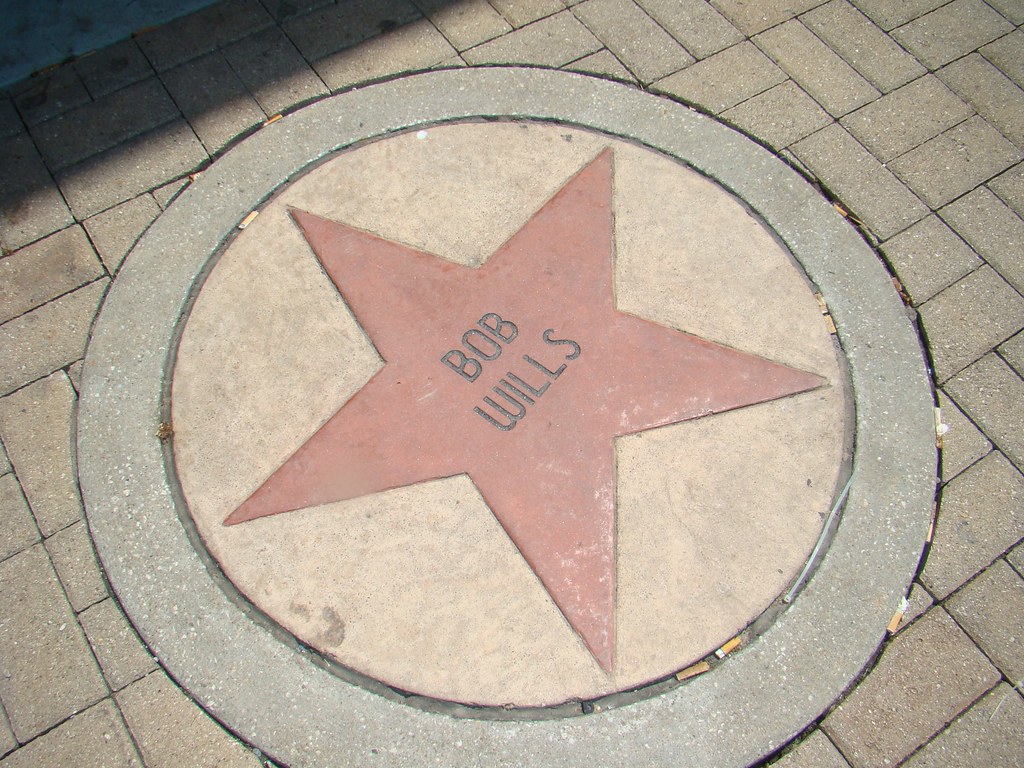
Today, they leave behind legacy songs such as “Take me Back to Tulsa”, “Big Balls in Cowtown”, and “New San Antonio Rose”. Ghosts of Bob Wills and his Texas Playboys can still be found in Downtown Tulsa at Cain’s Ballroom and hidden in plain sight such as the street named after them, “Bob Wills Avenue”.