Witteville Coal Mines
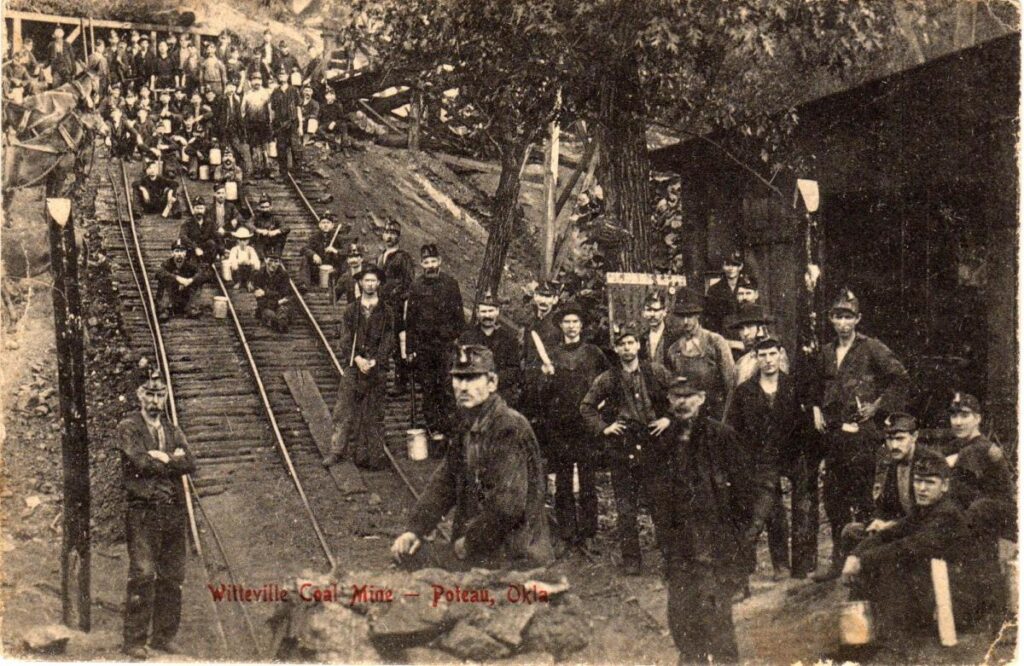
Witteville was once a prosperous mining town during the early 20th century. Located just three miles west of Poteau, the Witteville coal mines drew hundreds of workers from all over the world. During an age where coal was king, the mines in Oklahoma employed over 7,500 men and boys.
Oftentimes, children as young as 14 would work in the mines, receiving around a mere five cents for each ton of coal they extracted.
When the mines first opened, miners had to rely on brute strength to extract the coal. Heavy machinery did not come to the Witteville mines until around 1905, just a year before the massive Witteville coal mine explosion. This explosion ultimately led to the end of the coal miles on Cavanal Mountain.
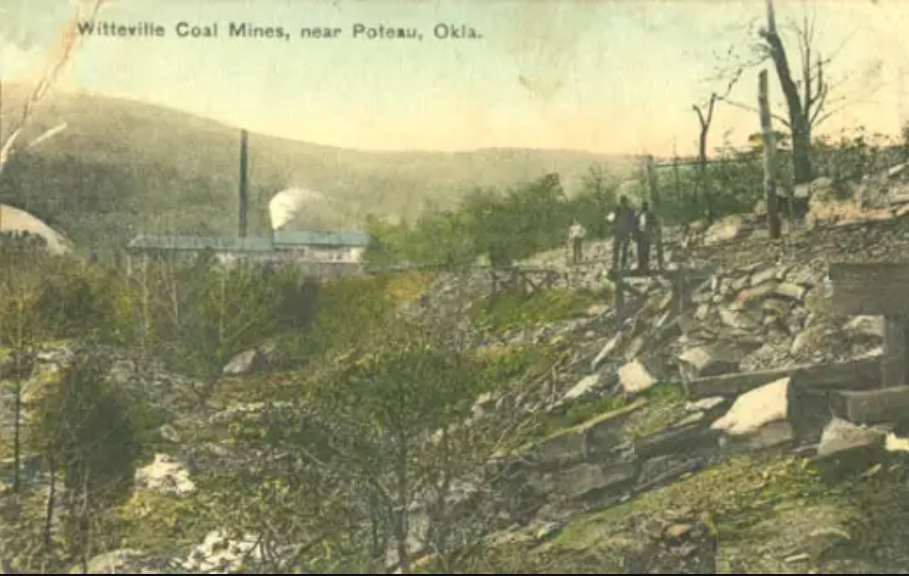
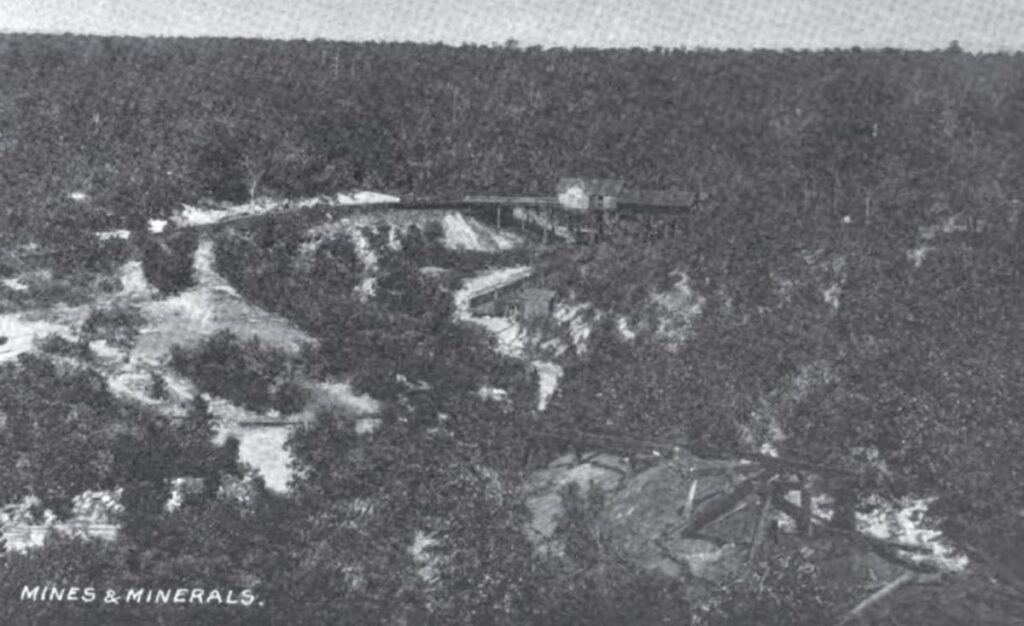
Today, the existence of the massive coal mining operations on Cavanal has been virtually wiped out by the forces of nature and progress. Modern homes populate the area where hundreds of miners once worked. The mines have either collapsed or become so overgrown with vegetation that their locations are almost a mystery. Very few people still know the whereabouts of the original mines.
Still, the Witteville coal miners left behind a legacy that endures. While the railroads brought people to Poteau, the mines kept them here.
Life in the Coal Mines
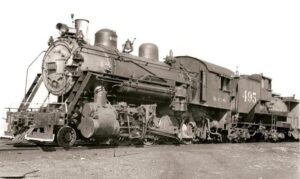
In the early 1890s, mine workers from Poteau would travel to the Witteville coal mines along the Kansas City, Pittsburg & Gulf Railroad (K.C.P. & G.R.R.) or the Fort Smith, Poteau and Western Railway (Ft. S. P & W. R. R.) to reach the Witteville mines.
These railroads were spurs off the main railroad lines that ran through Poteau. Remnants of this old railroad bed run along what are today Mockingbird Lane and Witteville Drive.
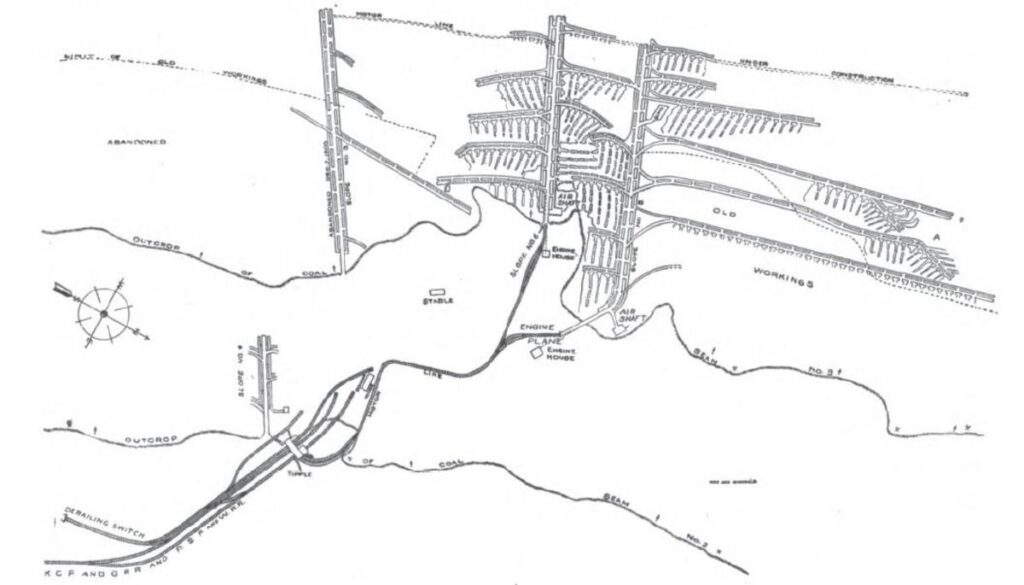
After traveling the 3.5 miles to the Witteville coal mines, miners arrived at the tipple, where they would travel further up the mountain by rail until they reached the mines. A tipple is essentially a loading station. This is where coal brought down from the mines would be loaded into the freight cars that would carry the coal across the country.
Due to the steep slope up to the mines, the tipple was located almost a quarter-mile away from the mines. From this point, miners would ascend the steep slope and ride the cars along the motor line to the mine entrance.
Once at the mines, the miners would begin the long and tedious job of extracting coal. Relying on hand tools, the miners could easily spend 10–12 hours a day underground. Many times, boys as young as 12 years of age could be found working alongside older men, as many of the regulations regarding underage employment were not established until 1914.
The Clayton Act of that year stated, “…the labor of a human being is not commodity or article of commerce”, and further established the first labor laws in the United States. Until this point, miners were considered expendable, and could be let go without a moment’s notice.
Work in the Witteville mines was intense. Dark, crowded spaces generally had a detrimental effect on the miners’ morale. The mineshafts, or slopes, were typically 6 feet wide and 5.5 to 6 feet high. Miners constantly had to stoop over as they moved about. The main slopes weren’t much better as they averaged eight feet wide and ranged from 5 feet 8 inches to 6 feet 2 inches high.
The Witteville mines employed the room and pillar mining system. Large rooms were excavated adjacent to the main shafts, with large pillars left to hold up the roofs. These rooms typically measured 155–187 feet in length, and 25–30 feet wide. The central pillars averaged 20–25 square feet thick.
The timber used to shore up these rooms and tunnels was obtained from Cavanal Mountain. Timbering was not used frequently, except in places where the roof is especially weak. Generally, the pillars were sufficient to hold up the ceilings.
As the coal was mined by hand, vertical cuts were made in the surface rock by pickaxe and black powder to extract the coal. Miners would create V-shaped cuts in the face of the rock surrounding the slab of coal. Black powder or dynamite was then inserted into the cuts and ignited.
The resulting chunks of coal that were dislodged from the blast would range from six to eight feet long. After each explosion, air would have to be circulated through the area to clear the air of the ever-present dust that lingered.
Once the coal was removed from the rock, it was then loaded by hand into cars located within the mines. Workers would then push the cars to the room’s entry point, after which they were hauled by motor or by mule power to stations located at the slopes entrance. From the slope’s entrance, the coal would then be hauled off to the tipple.
While moving the coal from the rock to the tipple was tough work, it could have been a lot worse. The mules were closely located to the slope openings, housed in stables located at the head of the gulch nearby. This ensured that plenty of the work-beasts could be brought quickly to the mines and that their strength was sufficient for the work they needed to do.
In addition, the mines themselves had a nominal 6-degree pitch to the northwest, which meant that the floors were relatively level. Entrance to the mines was almost level with the “gangway,” or main rooms. Most of the gangways and other rooms were laid out almost horizontally. Many mines during this period were not so horizontal, and greater pitches required more effort to move the cars.
Once the coal arrived at the tipple, it was then loaded into the railroad cars that would carry it across the country. After the coal was loaded into the railroad cars, scatter tags, small thin metal disks, were then sprinkled in with the coal in the railroad cars.
These scatter tags were used as a form of advertising, as the end-user who found one of these tags would know where the coal originated. If the buyer liked the quality of the coal, they would usually ask for the same kind next time.
The Witteville Mine Explosion in Indian Territory
Coal mining in the early 1900s was always a dangerous occupation. Across the country, thousands lost their lives due to human error or machinery malfunctions. At the Witteville coalmines, accidents were common, but none exuded the horror of the 1906 explosion.
The day began like any other typical day in January at the coalmines. A thin sheet of ice covered everything, and the miners could see the heavy mist of their breath as it rose in the air. Dismal faces looked stoically forward as they loaded themselves into the pit cars for the descent into the yawning mine.
As they moved deeper into the pit, it soon became apparent that the air pumps were not working correctly. Still, nobody said a word; for most, they simply needed the money. Their families were waiting at home, many of them barely surviving off the meager income the miners brought home.
Blackdamp, the mixture of air after the oxygen is removed, began to accumulate heavily throughout the day. The pit lights on the miner’s caps burned dimly as breathing became difficult, but the men worked steadily on, seemingly oblivious to the disaster that would soon come.
The nervous men tried whistling or singing while they worked, but nothing seemed to diminish the ominous feeling that surrounded them.
On January 24th, at 1:45 in the afternoon, mine No. 6 exploded, sending an array of splintered wood, jagged rocks, and limp bodies through the air. The explosion was set off by the massive amounts of carbon dioxide and methane gas in the air. Of those who were in the mine, none survived.
Just moments after the initial explosion occurred, a secondary aftershock rocked the other mines. Those miners in No. 3 were saved purely by luck, as the old No. 3, now abandoned, absorbed most of the shock and blocked the inferno from entering, but those in No. 4 weren’t as lucky. Fire and rock set off by the aftershock engulfed the miners, instantly killing everyone inside.
Every one of the six slopes in operation suffered damage. Rescuing the surviving miners was not an easy task, nor could it be completed quickly. Before rescuers could begin the task of searching for the living and retrieving the dead, massive air pumps had to be installed in order to clear the air inside the mines.
Once it was safe to enter, they had to remove fallen rock, dirt, and heavy timbers from the bodies of the dead. Many of the workers were crushed by the explosion, and their twisted and distorted bodies had to be removed for rescuers to continue.
Outside the mines, anxious wives and mothers waited for news of their loved ones. Hundreds of residents rushed to the mines after hearing the explosion, eager to help or simply staring in stunned silence.
The bodies of the dead were conveyed the next day in put-cars to the surface, where they were carried to the powerhouse by tram. The bitter cold that infiltrated the long night and morning did nothing to help ease the process.
During the next few days, some families identified the deceased workers while others were joyfully reunited with the living.
Because of the extensive damage, the number that died from mine No. 6 is unknown. Fourteen miners from mine No. 4 lost their lives in this tragic accident. Among those that died are John and William Alexander, Peter Dunsetto, Angelo Reek, J. H. Harp, James Duffey, Thomas Reek, Joseph Battley, F. Frankman, James Thomas, Angelo Spariat, Frank Reek, Joseph Turk, and A. H. Dunlap.
Today, nothing remains of the old Witteville mines aside from a small but steady stream of sulfur water.

© 2011 | Eric Standridge